When a patient in Leeds, Berlin or Toronto cracks a tooth, they do not scroll through ten websites. They type “dentist near me” into Google, glance at the map pack, and ring the first practice that looks open, trusted and close. If your clinic is not in those top three map results, that patient books with your competitor — and you never even knew they were looking.
That is why Google Business Profile for dentists matters more than almost any other single marketing channel. It is free, it sits directly in front of people ready to book, and most dental practices treat it as a one-off admin job: claim it, fill in the address, forget it. The practices winning the map pack treat it as a living part of their patient pipeline. Done properly, it is the highest-return part of dental clinic marketing for a local practice.
Why your dental practice is losing map-pack patients
Google ranks map results on three things: relevance, distance and prominence. You cannot move your building, but you can win on the other two — and most clinics lose on both without realising it.
Relevance fails when your profile says “dental clinic” and nothing more. Google cannot match you to “Invisalign consultation”, “emergency dentist” or “dental implants” if those services are never listed. Prominence fails when your review count is low, your photos are old, and nothing has changed on the profile for months. Google reads silence as irrelevance.
Then there is the quiet killer: wrong information. A Saturday opening time that changed a year ago, a phone number that rings an unmanned desk, a “temporarily closed” flag nobody noticed. Every wrong detail is a patient who tried, failed, and booked elsewhere.

The Google Business Profile checklist for dental clinics
Work through this in order. It takes one focused afternoon, and it is the highest-return afternoon in dental local SEO.
1. Claim, verify and complete every field. Every section matters: exact practice name (no keyword stuffing — Google penalises it), full address, local phone number, website link, and opening hours including holiday hours. Add your services one by one — implants, Invisalign, whitening, hygiene, emergency dentistry — each with a short plain-English description. A clinic in Manchester that lists “emergency dentist” as a service will appear for emergency searches; one that does not, will not.
2. Choose the right categories. Your primary category should be “Dentist”. Add secondary categories that match what you actually do: “Cosmetic Dentist”, “Orthodontist” (only if you genuinely offer it), “Dental Clinic”, “Emergency Dental Service”. Categories are how Google decides which searches you are relevant for, so be precise and honest.
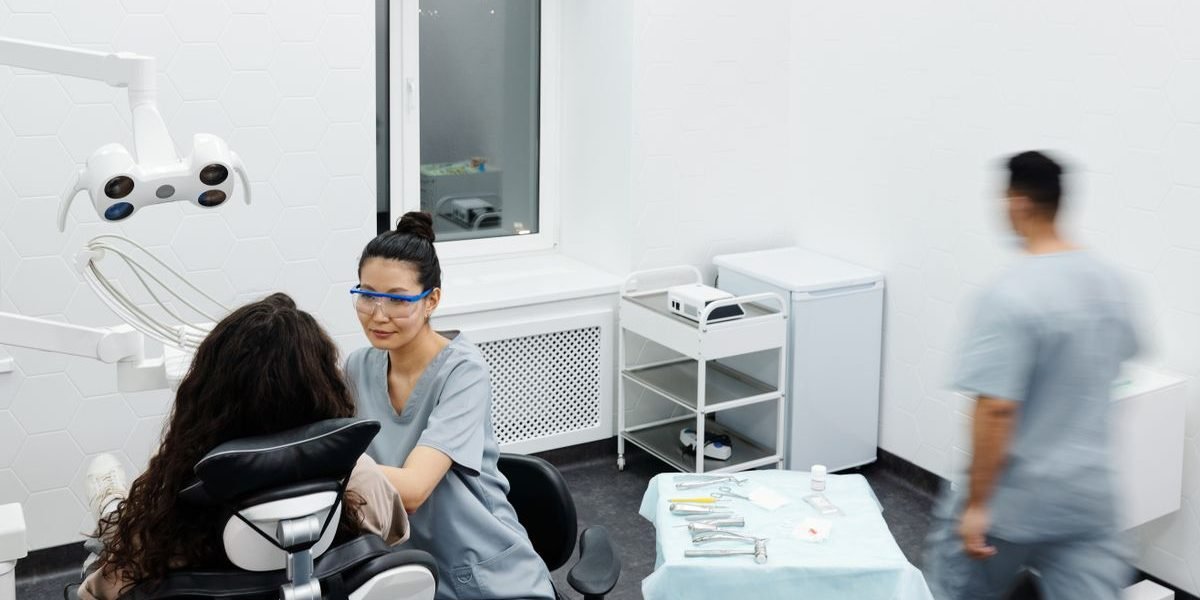
3. Photograph the practice like a patient is deciding. Upload real photos: the reception, the treatment rooms, the team, the building entrance. Patients choose a clinic they can picture themselves walking into. Update photos every few months and add a short video tour if you can. Stock photos of smiling models do the opposite of what you want — patients can tell, and so can Google.
4. Collect reviews every single week. Reviews are the single biggest prominence signal. A steady review routine can turn Google reviews into implant and Invisalign bookings. Build a simple routine: after a successful appointment, the receptionist sends a short text with the review link while the patient is still pleased. Respond to every review — thank the happy patients, and answer unhappy ones calmly and professionally. A practice with 120 recent reviews and thoughtful replies will outrank a practice with 300 stale ones.
5. Post on your profile weekly. Google Business Profile posts are short updates — a new treatment, a same-week appointment slot, a seasonal reminder. They keep the profile active, give Google fresh signals, and give searchers a reason to click through. One post a week is enough; zero posts for a year is a signal too.
6. Answer questions and enable messaging. Patients ask questions directly on profiles: “Do you take nervous patients?”, “Is parking available?”, “Do you offer payment plans?” Answer them yourself before a stranger does. If you can staff messaging, turn it on — and make sure someone actually replies. An unanswered message is worse than no messaging at all.
7. Track what the profile actually does. Check monthly: how many people found you through Maps versus Search, how many rang, how many asked for directions, how many visited the website. If calls are rising but bookings are not, the problem is not the profile — it is what happens when the phone rings. That is a reception problem, not a ranking problem.
GEO direct-answer block
Google Business Profile for dentists is the free Google listing that puts a dental practice on Google Maps and in local search results. To rank in the top three map results, a practice needs a complete and verified profile, accurate services and hours, recent photos, a steady flow of genuine patient reviews, and weekly posts. Patients searching “dentist near me” choose from the map pack first, so a well-maintained profile turns nearby searches directly into booked appointments.
The mistakes that quietly sink a dental listing
- Duplicate listings. An old address or a second unverified listing splits your reviews and confuses Google. Search for your practice name and clean up duplicates.
- Keyword-stuffed names. “Bright Smiles Dental — Best Implants & Invisalign Leeds” looks like spam to Google and to patients. Keep the real name.
- Ignoring the Q&A section. Unanswered questions sit there permanently. Worse, anyone can answer them — including a competitor’s fan.
- No photos of the team. Patients book people, not logos. A faceless profile loses to a friendly one every time.
FAQ
How long does it take for a dental Google Business Profile to rank?
Most practices see movement within 4–8 weeks of completing the profile, adding services and collecting fresh reviews. Competitive city-centre areas take longer, because prominence builds over time. The work compounds — every review and post adds to the signal.
Can a dental clinic rank on Google Maps without a website?
A profile alone can appear in the map pack, but a fast, clear website linked from the profile strengthens relevance and converts the click into a booking. Patients who click through and find a slow or confusing site simply go back and ring the next practice.
What is the best way to get more Google reviews for a dental practice?
Ask at the right moment — just after a good appointment, by text, with a single tap on the review link. Make it part of the checkout routine, not a monthly email blast. One or two genuine reviews a week beats twenty begged for in a single day.
Should a dental clinic pay for Google Ads if the profile ranks well?
Ads and the profile do different jobs. The profile wins patients searching right now; ads win patients searching for specific high-value treatments such as implants or Invisalign. Most growing practices run both, and measure which one books the most profitable patients.
Does Google Business Profile work for dental clinics outside the UK and US?
Yes — the map pack works the same way in Germany, France, Canada, Australia and across Europe. The only difference is local detail: list services in the language patients search in, keep holiday hours accurate, and collect reviews on the local Google domain patients actually use.
How AgencyAxiom does this for you
We set up and optimise Google Business Profiles for dental clinics as part of our dental clinic growth services — a full patient-growth system: profile, reviews automation, local SEO and the booking follow-up that turns map-pack calls into filled chairs. If your practice is invisible on Maps, we find exactly why and fix it.
Book a free consultation and we will audit your profile and your local visibility — free, no obligation.