
Sound familiar? You boost a post or launch a campaign, the clicks come in, the bill arrives — and the sales barely move. So you tweak a button, widen the audience, try again, and end up feeling like Meta ads work for everyone except you. Here is the honest truth: the platform is rarely the problem. The setup is. Good facebook ads management is mostly unglamorous work done in the right order — tracking first, structure second, creative third, scaling last. Let us walk through it step by step, the same way we do for clients in the USA, UK, Australia, Canada and the Middle East.
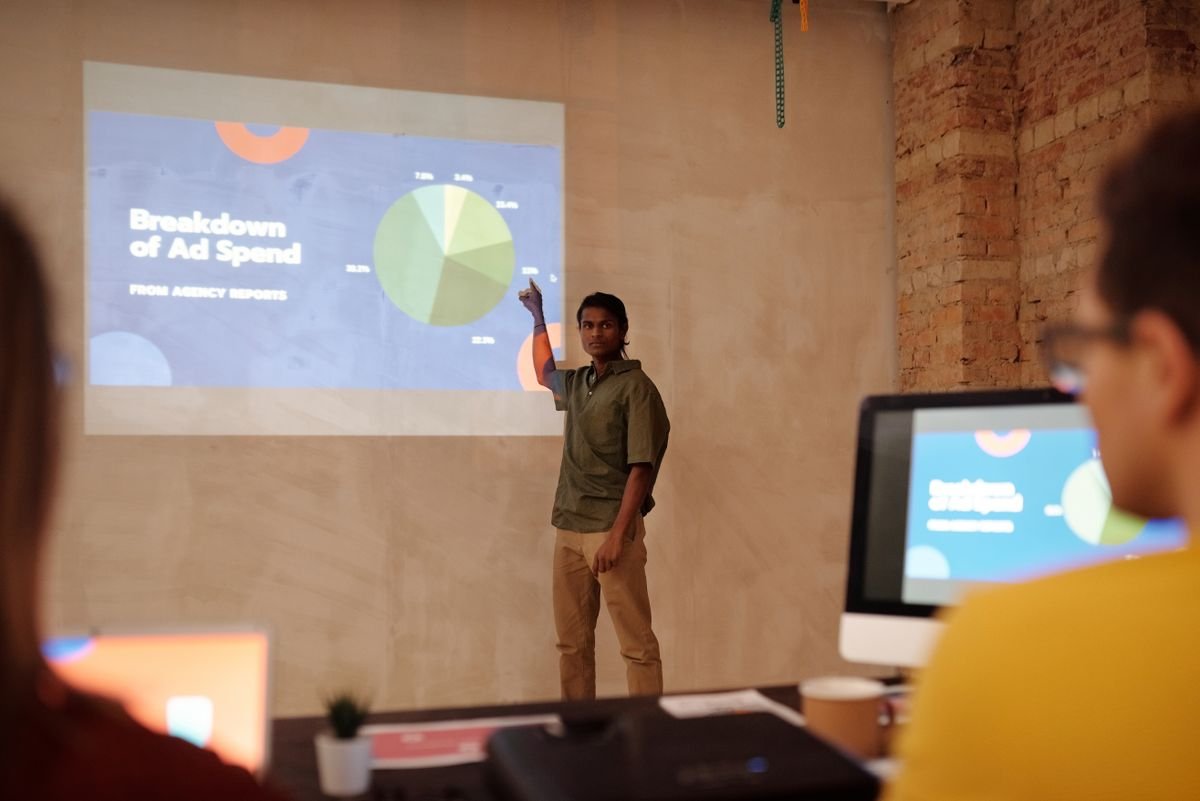
Facebook ads management starts before you spend a dollar: tracking
Before any ad runs, make sure you can actually see what your money does. Install the Meta Pixel and the Conversions API, then test that your key events fire correctly — page views, leads, add-to-carts, purchases, booked calls. Do it yourself in Meta’s test tools. If a purchase fires twice or a lead never fires, every decision you make later is built on sand, and no amount of clever targeting will save you.
While you are at it, agree on your numbers in advance: your target cost per lead or sale, the lowest return on ad spend you can accept, and the spend at which a failing test gets stopped. Write them down. It turns emotional calls (“this ad feels promising”) into calm ones (“it spent the test budget with no sales, so it stops today”).
How should you structure your audiences?
Keep it simple and give every audience one clear job:
- Prospecting: broad and interest audiences that introduce your offer to new people.
- Engagement: video viewers and page interactors — warmer and usually cheaper to reach.
- Website visitors: recent visitors and cart abandoners, grouped by how long ago they visited.
- Customers and lookalikes: built from buyers and qualified leads, never from random followers.
This is the part of facebook ads management most people skip, and it shows. When everything is mixed into one campaign, Meta spends where it likes and you learn nothing. Separated, each audience tells you exactly what it is worth.
Creative: your biggest lever (and the one you control most)
These days your ad itself does most of the targeting — the people who stop, watch and click are telling Meta who to find next. So test creative on a rhythm, not on a whim. Every week, launch a small batch of new ads built on different angles: a different problem, promise, proof point or customer story. In our facebook ads management work, a fresh angle in plain visuals beats the same message in prettier packaging almost every time.
For video, the first two seconds decide everything — open with the problem or the result, never your logo. For images, one message per ad, readable on a phone at arm’s length. Keep a simple log: what launched, the angle, the spend, the result. In a month, that log becomes your strategy.
Scaling winners without breaking them
When an ad proves itself at a steady cost for several days, scale it gently. Move proven winners into a CBO (campaign budget optimisation) setup so budget follows performance, and raise budgets in small steps rather than doubling overnight — sudden jumps often wreck the very results you want more of. Watch frequency too: when the same people have seen the same ad too many times, costs creep up. That is your cue to refresh the creative or rotate the angle, not to push harder.
Retargeting deserves the same care. Do not just show the same ad again. Sequence it: remind them what they viewed, answer the obvious objection (price, trust, delivery), then give a reason to act now. A cart abandoner and a casual video viewer are different people — talk to them differently.
Kill losers fast, and report like a friend
Your stopping rules protect your budget, so set them before you start and honour them. And when you review results — weekly is a good rhythm — look at the handful of numbers that actually matter: spend, sales or leads, cost per result, return on ad spend. Reach and likes are fine, but they do not pay invoices.
This is not theory for us. In our own Facebook case study, the Cheffy Corner campaign turned $21,018.61 of ad spend into $66,922.50 of sales — a 3.18x return on ad spend, 1,380 purchases, and a $0.90 cost per click. No single trick did that; the system did. If you want the full picture of how the pieces fit together, our services page lays it out.
Frequently asked questions
How much does facebook ads management cost?
It depends on your market and how much you spend on ads. Most agencies charge a flat monthly fee or a percentage of ad spend. What matters more than the fee is whether reporting shows exactly what the management produced in sales.
How long before I see results?
Expect early signals within one to two weeks of structured testing. Stable, scalable results usually build over four to eight weeks as winners are found, kept and scaled.
What do you need from me to get started?
Access to your ad account and website, a clear offer, and your target numbers — what a customer is worth to you and what you can spend to win one. We guide you through the access step by step.
What is the biggest mistake businesses make with Meta ads?
Spending before tracking works, and judging ads after a day. Close behind: one creative expected to run forever. A test budget, a testing rhythm and patience fix most of it.
Can I run the ads myself instead?
You can, and this guide is honestly enough to start. Most owners hand it over when their time becomes worth more than the fee — or when scaling needs daily attention they cannot give it.
If your ads feel like a slot machine, let us take a look. Book a free audit — we will check your tracking, structure and creative, and tell you plainly what we would fix first.